Manufacturing & International Communications
Why Garment Manufacturers Need PR to Win International Buyers
Garment manufacturers invest millions in production. Why not in their reputation?
By Wick Advisory
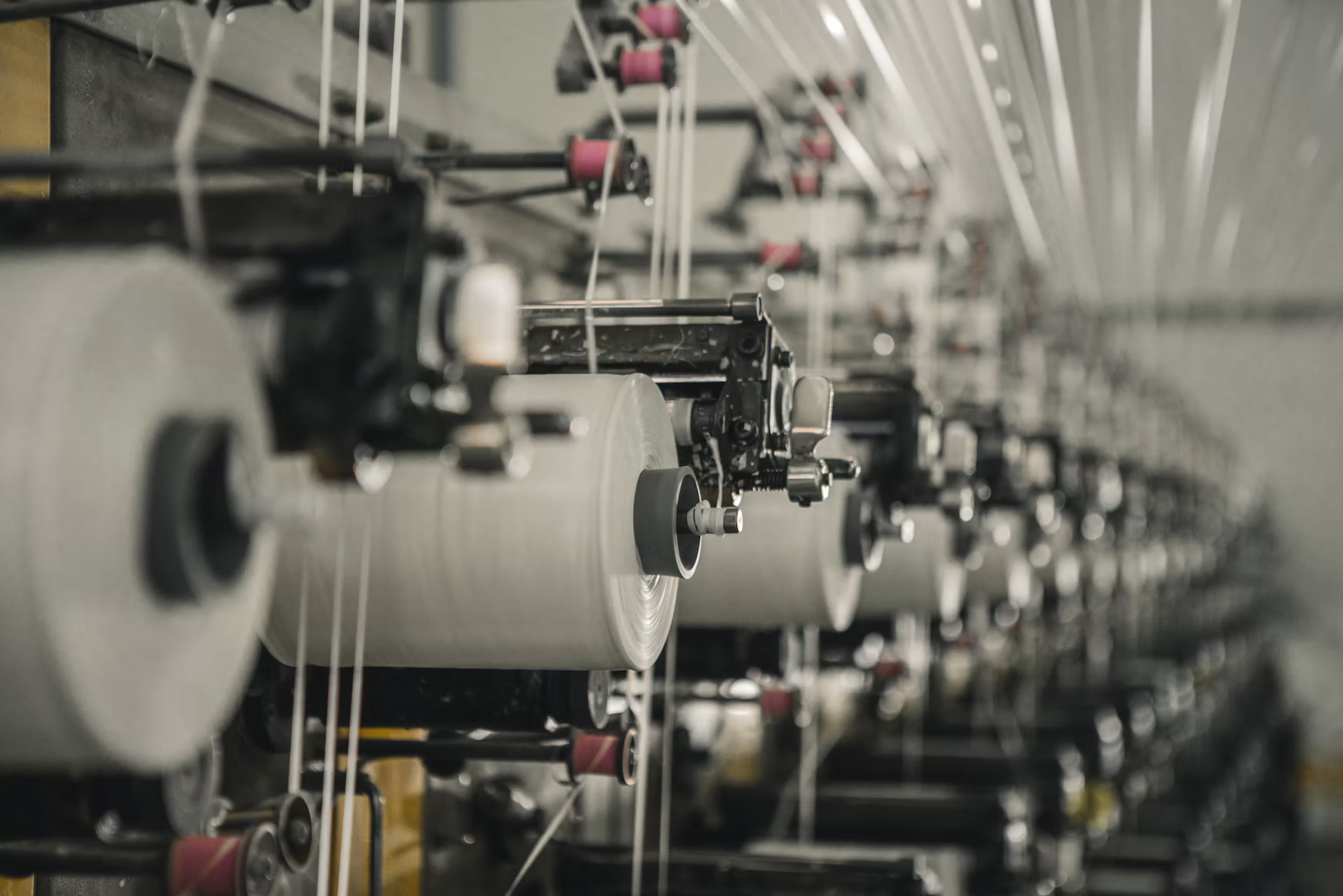
For garment manufacturers looking to attract international buyers, the investment shouldn't end at the factory gates.
Walk through any international garment sourcing exhibition and you'll find hundreds of manufacturers competing for the attention of buyers.
Elaborate stands, rails of samples, glossy brochures and sales teams flown in from across the world. Some businesses will have spent tens of thousands of pounds before they've even spoken to a prospective buyer.
Three days later, the stands come down, the samples are packed away and everyone flies home.
A few photographs appear on LinkedIn, usually thanking visitors for stopping by. Perhaps there'll be a follow-up email to the contacts made during the exhibition. Then it's back to business as usual.
I've seen this pattern across international business communications. Companies invest heavily in their operations, their people and their capabilities, but give much less thought to how that work is understood outside the business.
In garment manufacturing, this can mean substantial investments in worker health and safety, factory improvements, cleaner production and new technologies receiving little attention beyond existing customers and industry contacts.
Not every investment deserves a headline, of course. Meeting basic safety standards isn't something to celebrate as an extraordinary achievement. And communication should never become a substitute for dealing with poor working conditions or environmental harm.
But there's a difference between exaggerating progress and failing to communicate genuine improvements at all.
A disconnect between manufacturing capability and international recognition
Some of the world's largest garment manufacturers operate from Bangladesh, Vietnam, China, India and Pakistan. They employ thousands of people, manage complex supply chains and supply products to major fashion retailers.
Many have spent decades building their operations.
Yet visit their websites and you might find information that hasn't been updated for years. Their social media accounts are filled with exhibition photographs, holiday greetings and occasional announcements. There's very little about the people running these businesses, the decisions they're making or where they're heading.
It's not true of every manufacturer. Some have invested considerably in their international profiles. But the difference between what a company does and what it communicates can be striking.
A factory might have introduced new production technologies, expanded into higher-value products or made substantial changes to its operations. Potential customers looking online would struggle to find any of it.
And that's a problem when you're trying to win business in a market where buyers have plenty of alternatives.
Price, quality, capacity, compliance and reliable delivery remain essential. No communications strategy can make up for failures in any of those areas.
But when two manufacturers offer similar capabilities, how well a buyer understands each business can influence which conversation goes further.
What happens after the exhibition?
Imagine a European sourcing director meets your team at a trade show in London.
They're interested in your products. You've had a good conversation, exchanged details and agreed to follow up.
Later, someone in their team searches for your company online.
What they find may reinforce everything your sales team told them. Or it may leave them with little more than a list of machinery, factory locations and production figures.
This is one reason I think garment manufacturers should take their digital presence more seriously.
A website is often treated as a brochure that happens to exist online. But it can also help a potential buyer understand the business before agreeing to a meeting or factory visit.
Who runs the company? Which markets does it serve? What has changed in recent years? What evidence is available to support its claims about working conditions, environmental performance or manufacturing capabilities?
These aren't unreasonable questions for a prospective customer to ask.
They're also questions manufacturers should be answering long before someone needs to email their sales team.
The exhibition shouldn't be the entire marketing strategy
Trade shows such as Source Fashion in London offer manufacturers valuable access to buyers they might otherwise struggle to meet.
I'm not suggesting companies stop exhibiting. Quite the opposite.
But given the money involved, it seems strange that so much effort goes into preparing for the event itself, while comparatively little goes into building visibility around it.
If a manufacturer is travelling to London to exhibit, why wait until the doors open to start telling people about the business?
Perhaps the company has expanded its production capabilities. Perhaps its leadership has an informed view on changing sourcing patterns or the pressures facing exporters. Perhaps it has made measurable improvements to factory safety or resource efficiency that would be relevant to potential customers.
There's room to communicate these developments before the exhibition, through industry media, the company's own channels and direct engagement with the people it wants to reach.
And once the event is over, the story shouldn't disappear with the exhibition stand.
A manufacturer that has spent £30,000 or £50,000 attending a trade show should be thinking seriously about how to get value from that investment beyond the three days it is physically there.
That doesn't mean every company needs an expensive campaign. Sometimes the starting point is as simple as having a clear company profile, a credible website, useful content and a plan for engaging prospective buyers after the event.
Why aren't we hearing more from manufacturing leaders?
This is another area I find interesting.
Some garment manufacturing businesses have been built from relatively modest beginnings into enormous international operations. Their founders and senior executives have navigated changing trade relationships, economic uncertainty, supply-chain disruptions and major shifts in how clothing is produced and sold.
Yet outside the industry, many of these people are barely known.
Meanwhile, discussions about the future of garment manufacturing are often led publicly by international fashion brands, retailers, policymakers and campaigners.
Manufacturers have their own perspectives on these issues. They understand the practical consequences of sourcing decisions, the cost of upgrading production facilities and the difficulties involved in responding to changing regulations.
That doesn't mean their positions should go unchallenged. The industry has serious problems that deserve scrutiny, and manufacturers should be expected to answer difficult questions about their practices.
But surely those running these businesses should be part of the discussion.
An experienced manufacturing executive could contribute to conversations about trade policy, industrial investment, automation, workforce development or the future of global sourcing.
There are opportunities for opinion articles, interviews, industry discussions and more regular engagement with international media.
This isn't about making CEOs famous.
It's about ensuring that people with something useful to say are actually heard, rather than appearing publicly only when their company makes an announcement or faces criticism.
Health and safety isn't a PR exercise
There is an important distinction to make when discussing reputation in the garment industry.
Worker health and safety, wages, labour rights and environmental standards aren't branding exercises. They concern people's lives and livelihoods.
The industry's history, including major industrial disasters and longstanding concerns about working conditions, makes scrutiny entirely justified.
Manufacturers shouldn't be using public relations to distract from legitimate criticism or to promote claims that don't stand up to examination.
But neither should genuine progress go undocumented.
If a business has invested in building safety, improved its wastewater treatment facilities or introduced changes that have measurably improved working conditions, there is value in communicating what has happened.
Not with vague claims about being a 'responsible manufacturer', but with details.
What was the problem? What did the company change? What evidence supports the results? What remains unresolved?
Those last two questions are particularly important.
A business that acknowledges where more work is needed can be more credible than one that presents itself as having solved every problem.
For international buyers, being able to access accurate information about a supplier's operations can also support the wider due diligence they need to undertake.
Good corporate communications should make businesses more accountable for what they say, not less.
PR for garment manufacturers needs to serve a commercial purpose
Manufacturers don't need publicity for the sake of publicity.
They need to reach the people who matter to their business, whether that's international buyers, sourcing directors, investors, policymakers or prospective commercial partners.
For a garment exporter entering the UK market, that might mean building recognition among British retailers and trade publications.
For an established manufacturing group, it could mean improving how the company is represented internationally, ensuring its senior executives are visible in relevant industry discussions or communicating a major expansion.
Others may simply need to get the basics right: an up-to-date website, a clear explanation of their capabilities and a more consistent presence on LinkedIn.
A PR strategy for garment manufacturers should begin with the business objectives, not a list of press releases to distribute.
And it should be judged on more than the number of articles published. Are the right people becoming familiar with the company? Is its reputation better understood? Is the communications activity supporting conversations that could lead to commercial opportunities?
These questions matter far more than producing publicity that looks impressive in a monthly report but reaches nobody the business particularly needs to speak to.
Reputation deserves investment too
The garment industry has no shortage of companies capable of producing high-quality products at enormous scale.
But there are businesses doing substantial, interesting work whose international presence barely reflects what they've built.
It's worth asking how many potential opportunities are being missed because prospective partners simply don't know enough about them.
Manufacturers understand long-term investment. They make decisions about machinery, facilities, recruitment and technology knowing that the returns won't necessarily appear overnight.
Reputation works in much the same way. It develops through consistent actions, credible information and relationships built over time.
No single article, interview or exhibition will transform how a company is perceived.
But leaving international visibility entirely to chance doesn't seem like much of a strategy either.
For manufacturers looking to expand into new markets and build relationships with international buyers, it's time to give communications a more serious place in the business.
Wick Advisory is an international strategic communications consultancy working with garment and textile manufacturers on corporate reputation, international PR, executive positioning and market visibility.
Learn more about our garment and textile manufacturing communications services.
Related services
Garment & Textile Manufacturing PR →Looking to strengthen your international reputation?
Wick Advisory works with garment and textile manufacturers to build international visibility, strengthen corporate reputation and position senior executives in the markets that matter to their businesses.
Discuss Your Communications Strategy